

Say you’re walking through an art gallery. On one wall, there’s a painting worth millions. On another, a digital screen displays a colorful piece of art.
Here’s the twist – someone owns that digital artwork, just like they might own the Mona Lisa.
And it’s not just art. It could be music, videos, tweets, or even virtual land in a video game. These digital items are called NFTs.
But what exactly is an NFT? Why is it worth anything? Let’s dive in, and I’ll explain it in plain, simple terms.
NFT Basics: What Does NFT Stand For?
NFT stands for Non-Fungible Token. Don’t worry if that sounds complicated; we’ll break it down:
This means it’s unique and can’t be replaced with something else. Think about a baseball card or a rare coin. If you trade it, you don’t get an exact copy back. Compare this to a $10 bill – you can swap it for another $10 bill, and it’s the same thing. That’s fungible.
This is a digital certificate that says, “You own this thing.” It’s stored on a blockchain, a secure and transparent system that keeps track of who owns what.
In simple terms, an NFT is a digital collectible or asset that’s one of a kind.
Why Are NFTs Such a Big Deal?
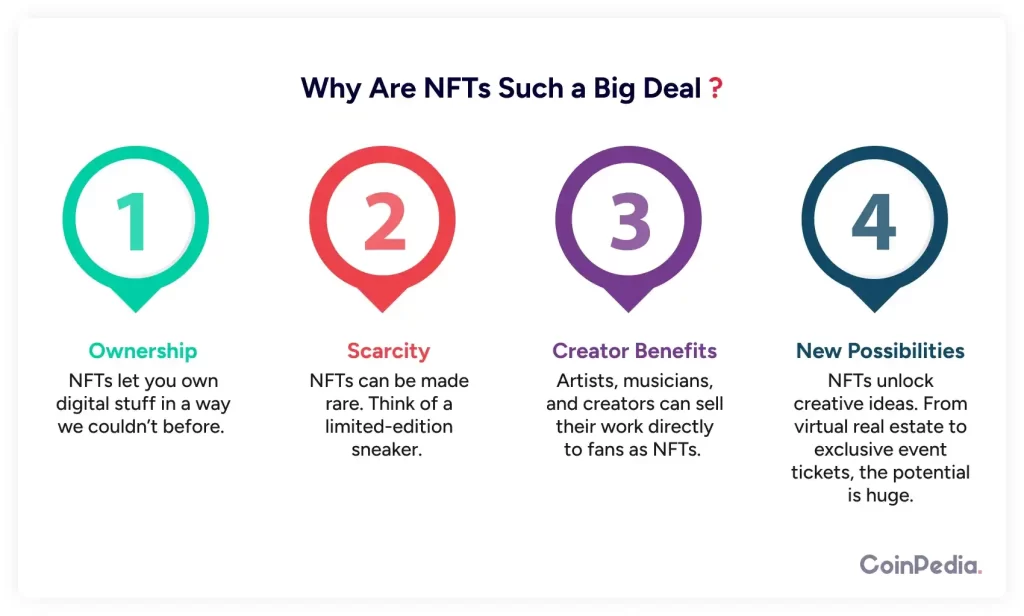
Okay, so NFTs are unique digital items. But why do people care about them? Let me give you some reasons:
- Ownership:
NFTs let you own digital stuff in a way we couldn’t before. If you own an NFT, the blockchain proves it’s yours. No one else can claim it.
- Scarcity:
NFTs can be made rare. Think of a limited-edition sneaker. Only a few pairs are made, so they’re valuable. The same goes for NFTs. If there’s only one piece of a digital artwork, it becomes rare and special.
- Creator Benefits:
Artists, musicians, and creators can sell their work directly to fans as NFTs. Plus, they can earn a percentage every time it’s resold. Imagine selling a painting and getting paid every time it’s auctioned in the future.
- New Possibilities:
NFTs unlock creative ideas. From virtual real estate to exclusive event tickets, the potential is huge.
Examples of NFTs
Still feeling a bit fuzzy about NFTs? Let me show you some real-world examples:
Beeple, a digital artist, sold an NFT called Everydays: The First 5000 Days for a whopping $69 million in 2021. Yes, it’s just digital art, but someone owns it like a prized possession.
Kings of Leon, a rock band, released their album as an NFT. Fans who bought it got special perks like exclusive songs and VIP concert tickets.
Twitter’s founder, Jack Dorsey, sold his first-ever tweet as an NFT for over $2.9 million. That’s right – a tweet!
Gamers can buy NFTs like rare weapons, skins, or even virtual land in games. Unlike traditional games, they can sell these items to other players or keep them forever.
How Do NFTs Work?
Now that we know what NFTs are, let’s talk about how they work.
NFTs live on a blockchain, which is like a digital ledger. The most popular blockchain for NFTs is Ethereum. Think of it as a giant notebook that keeps a record of everything.
When you buy an NFT, your name (or wallet address) is written in that notebook next to the item you own. Everyone can see it, but only you can sell or transfer it.
Here’s the cool part:
NFTs can have extra features. For example, an NFT artwork might include a high-resolution file, a backstage pass to an event, or a thank-you message from the creator.
Why Are Some NFTs So Expensive?
You might be wondering, “Why would anyone spend millions on something they can’t even touch?” Let’s break it down:
- Rarity:
People value things that are rare. If there’s only one NFT of a certain artwork, it’s like owning the original Mona Lisa.
- Hype:
Just like with sneakers or luxury cars, hype plays a big role. If a famous person or brand creates an NFT, its value can skyrocket.
- Utility:
Some NFTs come with perks. For example, owning an NFT might give you access to exclusive events or online communities.
- Investment:
Some people see NFTs as an investment. They buy them hoping their value will go up over time.
The Criticism of NFTs
Not everyone is a fan of NFTs.
Here are some of the main concerns:
- Environmental Impact:
Creating and trading NFTs uses a lot of energy because blockchains like Ethereum rely on powerful computers. However, newer technologies are trying to make this process greener.
- Speculation:
Some people buy NFTs just to flip them for profit. This has led to a bubble, where prices go up and then crash.
- Copyright Issues:
Just because you own an NFT doesn’t mean you own the rights to the artwork or can use it however you want. This has confused many buyers.
Are NFTs Here to Stay?
NFTs are still new, and no one knows for sure how they’ll evolve. But they’ve already changed the game for digital ownership and creativity.
Here’s what might be coming:
Big companies like Nike, Adidas, and Coca-Cola are exploring NFTs. As more brands join in, NFTs could become a normal part of life.
Blockchains are improving. Newer systems like Solana and Polygon are faster and more eco-friendly, making NFTs more accessible.
NFTs could be used for things like concert tickets, real estate contracts, or even ID cards. The possibilities are endless.
How to Get Started with NFTs
Feeling curious?
Here’s how you can dip your toes into the world of NFTs:
- Set Up a Wallet:
You’ll need a digital wallet to store your NFTs. MetaMask is a popular choice.
- Buy Some Crypto:
Most NFTs are bought with cryptocurrency, like Ethereum. You can buy it on exchanges like Coinbase or Binance.
- Choose a Marketplace:
Platforms like OpenSea, Rarible, and Foundation let you browse and buy NFTs. Think of them as digital auction houses.
- Start Small:
Don’t rush to spend big money. Look for affordable NFTs to get a feel for how it works.
So, what’s next?
NFTs are more than just a trend. They’re a new way to own, share, and trade digital creations. Sure, they’re not perfect, and there’s a lot of hype. But they’ve opened doors for artists, collectors, and even gamers to explore a whole new world.
So, whether you’re an artist looking to share your work, a collector hunting for unique items, or just someone curious about the latest tech, NFTs are worth checking out. Who knows?
Your first NFT might just be the start of something exciting.
FAQs
An NFT is a unique digital asset stored on a blockchain, proving ownership of items like art, music, and virtual land.
NFTs are valuable due to their rarity, hype, and added perks, with some even acting as investments or exclusive access to events.
To buy an NFT, set up a digital wallet, purchase cryptocurrency like Ethereum, and browse NFT marketplaces such as OpenSea.
Yes, NFTs can be resold, and some creators earn royalties every time their NFT is resold on the secondary market.