
TLDR:
- A prediction-market contract put the CLARITY Act near 14% odds of becoming law in 2026 before the September 15 vote; that was not a 12-month forecast.
- The CFTC’s September 24 FAQ update clarified tokenized forms of already-permitted customer-fund investments and blockchain-based recordkeeping, without widening eligible assets.
- The SEC’s five-year conditional exemption covers certain permissioned venues trading tokenized U.S. stocks, while leaving altcoin products and most crypto platforms outside its scope.
- Agency guidance can move quickly, but it may change or face legal challenges; a statute could set more durable lines for jurisdiction, registration, and customer protections.
The CLARITY Act has stalled, but U.S. crypto regulation continues through agency action. The SEC and CFTC apply authority to tokenization, recordkeeping, and trading. These steps shape compliance as institutions assess digital assets, including altcoins. However, agencies cannot settle questions about jurisdiction, registration, or consumer safeguards that Congress could address.
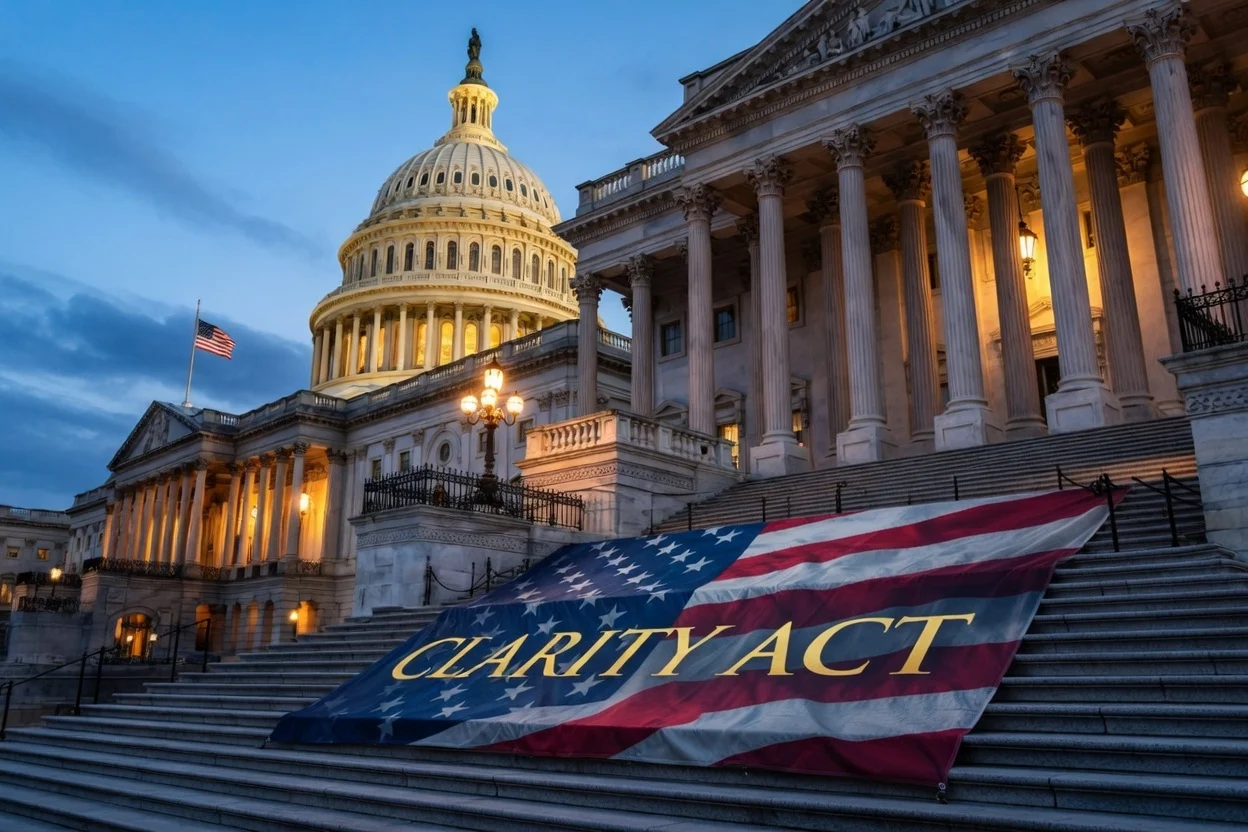
On September 15, the Senate failed to advance the CLARITY Act in a procedural vote, not a final rejection. Before the vote, a prediction-market contract put the bill’s 2026 passage odds near 14%. That was a calendar-year estimate, not a forecast for the next twelve months. No vote is scheduled.
What the CLARITY Act Could Change for Crypto Markets
The CLARITY Act would set a federal market-structure framework. It would define when tokens qualify as securities or commodities and divide SEC and CFTC oversight. It would also set registration and consumer-protection requirements. Clearer categories could reduce jurisdictional disputes and help firms decide how to operate. The bill would give investors a firmer basis for understanding platform duties.
Those duties matter when an exchange holds customer assets. Users want to know how firms must safeguard funds, keep records, and respond to breaches or losses. Rules under the CLARITY Act could support consistent compliance across platforms. They would not guarantee safety, prevent every hack, or shield investors from losses caused by volatility.
A framework may affect institutional participation. Retirement plans, insurers, and asset managers could assess crypto exposure against clearer responsibilities and safeguards. Registration pathways might attract more buyers and sellers, supporting liquidity and price discovery. Institutions must weigh custody, demand, liquidity, and volatile-asset risk.
SEC and CFTC Rules Move Ahead While Congress Stalls
The CFTC’s September 24 FAQ update offers an example. This matters for compliance across derivatives markets. Staff clarified how registrants may use tokenized forms of investments already permitted for customer funds. They also addressed blockchain systems for keeping and producing required records. The update does not expand the eligible investment list or create a new regime. It applies existing requirements to tokenization and distributed ledgers.
The FAQs build on staff guidance about tokenized collateral. The CFTC says they reflect staff views, create no binding rules, and amend no regulations. The update can guide compliance planning, but is narrower than a statute or agency rule. It concerns registered firms, not a comprehensive definition of digital assets or allocation of SEC and CFTC jurisdiction.
The SEC has acted under existing authority. On September 17, it approved a temporary, conditional exemption for certain venues trading tokenized U.S. stocks in permissioned settings. The five-year measure allows limited on-chain trading while the agency considers broader rules. It does not authorize all crypto platforms or approve altcoins. Its scope covers tokenized national-market-system stocks.
These examples show why the CLARITY Act still matters as regulation advances. Agencies can address narrower questions and test approaches, but their actions depend on current statutes. Guidance may change, exemptions have conditions, and agency measures can face court challenges or leadership shifts. Congress could provide more durable rules for asset classifications, venue responsibilities, registration, and investor protections.
That certainty could help institutions assess crypto, but regulation is not a government endorsement. Bitcoin and other cryptocurrencies remain speculative and volatile. The CLARITY Act would not make those assets safe or eliminate market risk. Stablecoins and distributed-ledger systems may serve payment or settlement uses, especially when tokens represent assets such as U.S. Treasurys. Those uses differ from spending volatile crypto on everyday goods and carry distinct risks.
For now, the CFTC FAQ update clarifies tokenized permitted investments and blockchain recordkeeping within existing rules. The SEC exemption addresses limited trading of tokenized stocks. Unresolved questions include who regulates each market, which firms must register, and what consumer protections users can expect.
